In road construction, landscape engineering, and building foundation projects, small and medium road rollers play a key role in base treatment due to their flexible operation and high compaction efficiency. Mastering scientific construction techniques can fully unleash the roller's performance, ensuring both project quality and efficiency. Here are the core operational insights from a practical perspective:
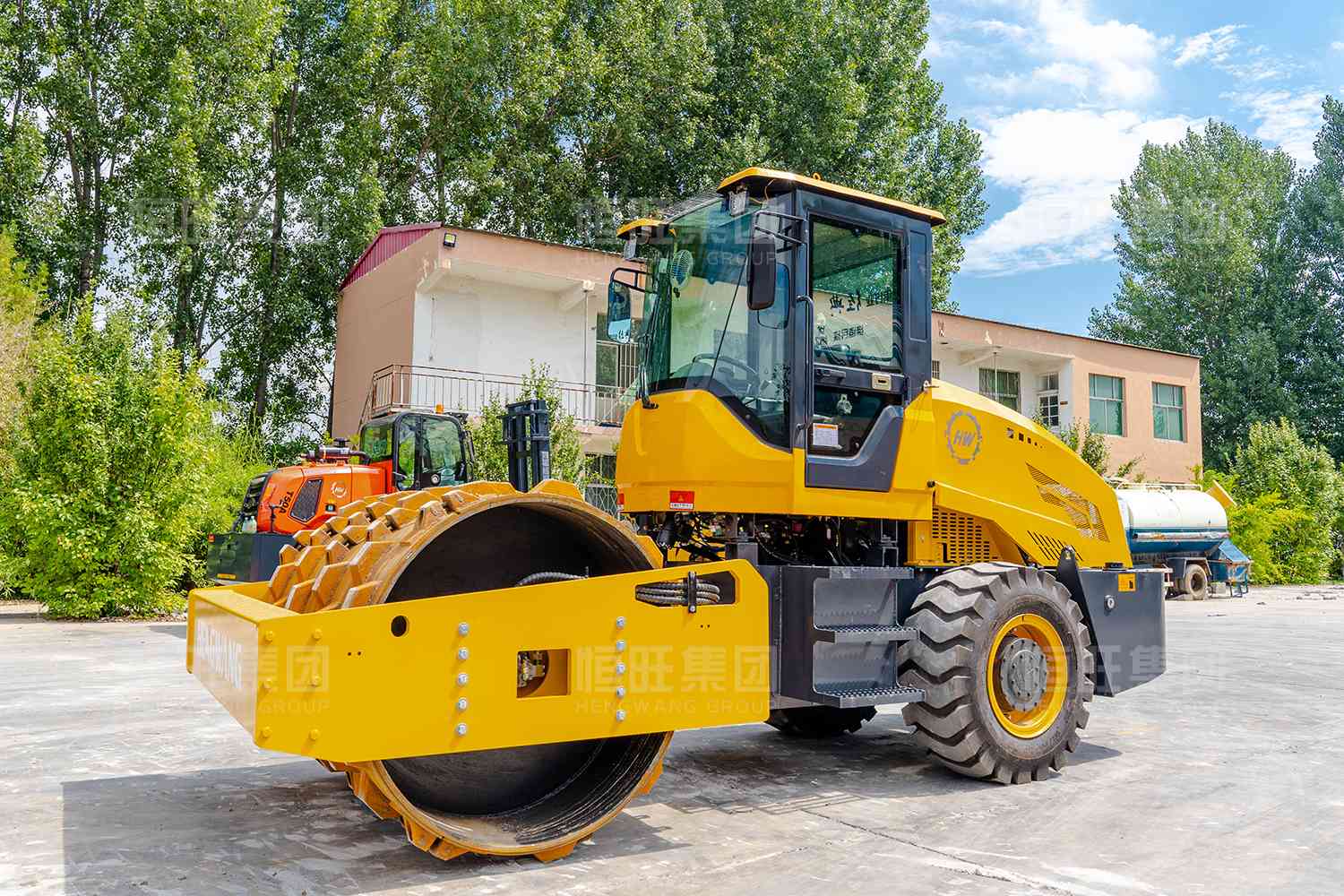
Before starting the road roller, conduct a thorough check of the power system, braking components, and vibration device:
Power System: Check engine oil and coolant levels, inspect hydraulic pipelines for leaks, and ensure stable power output.
Braking and Execution Components: Test brake sensitivity, observe tire or compaction drum wear, and clean debris adhered to the drum surface to ensure smooth operation.
Vibration Function: Run the vibration system idle, listen for abnormal noises in bearings, and confirm normal adjustment of vibration functions to lay the foundation for subsequent operations.
Develop targeted plans based on construction site conditions:
Soil Characteristics: Identify soil types and judge whether moisture content is suitable for compaction, adjusting humidity by drying or watering if necessary.
Environmental Survey: Mark underground pipelines, slopes, and other risk areas; preheat equipment in low-temperature environments to ensure the road roller adapts to construction conditions.
Base Status: Evaluate the thickness and uniformity of the material to be compacted, and plan a reasonable compaction route to avoid repeated or missed areas.
The driving speed of road rollers directly affects compaction efficiency and should be adjusted dynamically according to operation stages:
Initial Compaction: Adopt a stable low speed to allow the drum to contact the base evenly, initially compacting surface loose materials and providing a stable foundation for subsequent work.
Recompaction: Moderately increase speed and activate the vibration function to ensure effective transmission of vibration force to deeper layers, enhancing overall density.
Final Compaction: Reduce speed for static compaction to eliminate surface wheel tracks and form a smooth, uniform compacted layer.
Key Principle: Maintain uniform speed to avoid uneven compaction caused by sudden speed changes, which affects project quality.
For different material bases, adopt a layered compaction process:
Layer Thickness: Control the thickness of each compaction layer according to material characteristics, avoiding excessive thickness that leads to incomplete compaction or loose interlayers.
Compaction Sequence: Follow the principle of "edge first, center later," with adjacent compaction tracks overlapping appropriately to ensure no missed areas.
Terrain Adaptation: On slopes, compact horizontally first to stabilize edges, then proceed longitudinally in layers to prevent material sliding; slow down in curved areas to ensure the road roller turns smoothly and avoids skidding risks.
Adjust the vibration system reasonably based on soil type and compaction requirements:
Soft Soils: Use larger amplitude with lower frequency to enhance vibration penetration, break soil particle adhesion, and improve deep-layer compaction.
Sandy or Gravel Bases: Choose smaller amplitude with higher frequency, using high-frequency vibration to rearrange particles, reduce voids, and improve surface density.
Operation Notes: Activate the vibration function while the road roller is moving; never vibrate in place to avoid local over-compaction. Clean the drum surface promptly after each compaction pass to ensure continuous efficient operation.
After finishing compaction, conduct multi-dimensional checks on construction results:
Surface Evenness: Observe whether the base surface is smooth, free of obvious wheel tracks or unevenness, and use static compaction to correct local deviations if necessary.
Overall Density: Use professional tools to detect base density, ensuring it meets design requirements; re-compact non-compliant areas.
Settlement Observation: Recheck after a standstill period. If local settlement is found, analyze the cause and take measures such as backfilling and supplementary compaction to eliminate quality hazards.
Forbidden Operations: Never make sharp turns or sudden braking on steep slopes while vibrating; avoid idling in the same position for extended periods to prevent equipment component damage.
Multi-Machine Collaboration: Maintain a safe distance when operating multiple road rollers to avoid resonance affecting equipment performance and compaction results.
Daily Maintenance: Clean debris from drum gaps after each shift, and regularly lubricate key components like vibration bearings to extend the road roller’s service life.
The efficient construction of small and medium road rollers hinges on "adequate preparation, reasonable speed, fine layering, adaptive vibration, and strict inspection." Applying these techniques scientifically ensures that base compaction meets engineering standards while significantly improving construction efficiency, allowing road rollers to perform optimally in various conditions. Focusing on detailed operations and equipment maintenance is key to achieving high-quality construction.